
Industrial machines are fundamental components in production processes. These machines have a wide range of applications, particularly in heavy industries, automotive, oil and gas, construction, and many other sectors. Industrial machines are designed to perform complex, fast, and precise tasks. This article will discuss three types of industrial machines: magnetic drills, sheet metal punches, and manual punches.
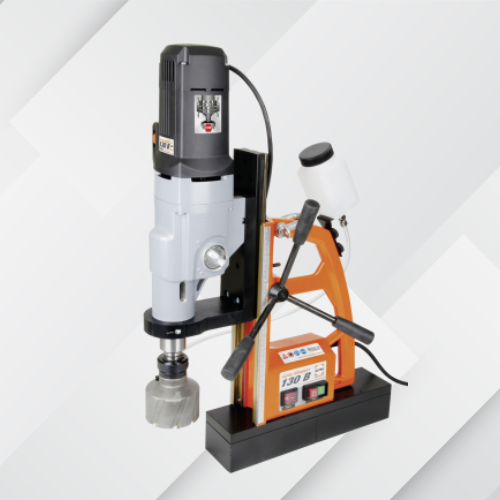
A magnetic drill is an advanced tool used for precise and fast drilling on metal parts and steel plates. This machine uses an electromagnetic base that allows it to attach firmly to a metal surface, enabling drilling operations without the need for manual holding.
Advantages:
High Precision: This machine can create holes with very high accuracy in various sizes.
Easy Portability: Due to its light weight and ease of transport, this machine can be used in different locations.
Increased Safety: Since the machine does not need to be held manually, risks associated with vibration and loss of control are minimized.
Use in Tough Environments: The magnetic drill can be used in tight spaces and harsh conditions.
Applications:
Magnetic drills are used in various industries such as metal structure construction, maintenance and repair, oil and gas, and machinery manufacturing. This machine is particularly useful in situations where drilling is required on vertical or inclined surfaces.
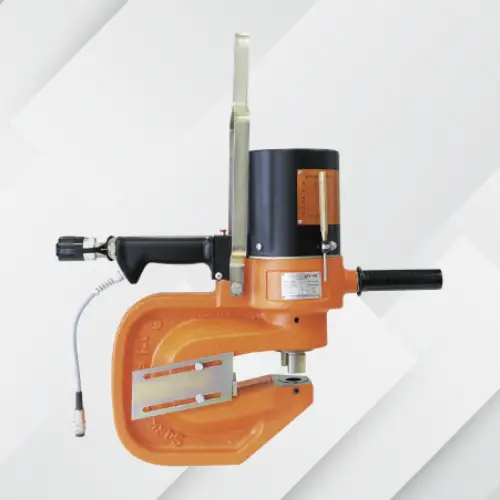
A sheet metal punch is another industrial machine used for drilling, cutting, or shaping metal sheets. This machine typically consists of a fixed die and a moving die that creates precise holes through pressure.
Advantages:
Fast and Efficient Operation: This machine can quickly and precisely create holes.
Variety of Shapes: The sheet metal punch can cut not only holes but also shapes like squares, rectangles, or custom designs.
Time and Cost Efficiency: The sheet metal punch accelerates the production process and reduces manufacturing costs.
Applications:
The sheet metal punch is used in industries such as the production of metal fasteners, automotive parts, home appliances, electrical panels, and electronic equipment. It is ideal for producing parts with high precision and standardized dimensions.
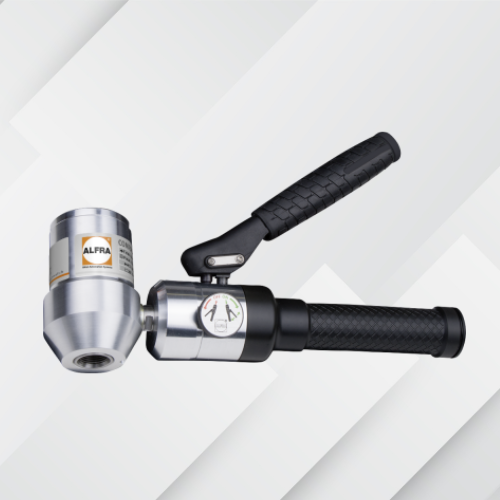
A manual punch is a machine used for making holes or shaping materials such as metal, plastic, and wood. Unlike the sheet metal punch, the manual punch operates manually and is typically used in smaller-scale workshops.
Advantages:
Low Cost: Manual punches are generally more affordable than automatic machines.
Flexibility: This device is suitable for small-scale operations and can be used for a variety of hole-making tasks.
Ease of Use: With its simple design, anyone can easily operate this machine.
Applications:
Manual punches are widely used in small workshops, craft industries, light metalworking, and simple production tasks. This machine is ideal for applications that do not require high precision or speed.
Each of these three machines serves a different need and their selection depends on the type of task and scale of production. A magnetic drill is used for precise drilling operations and larger tasks, while a sheet metal punch is employed for fast, efficient drilling in industrial production. The manual punch, on the other hand, is ideal for simple tasks and small-scale production.
Magnetic Drill: Suitable for precision drilling and high accuracy.
Sheet Metal Punch: Used for fast and efficient drilling in industrial applications.
Manual Punch: Suitable for small-scale, manual tasks.
Industrial machines, such as the magnetic drill, sheet metal punch, and manual punch, are crucial in various sectors. Each machine has its own set of advantages and application areas. Choosing the right industrial machine can significantly enhance productivity, reduce costs, and improve production quality.
Address: Atakent Mah. 221. Sk. Rota Office Sitesi A Blok No: 3/1 iç Kapi No: 17 Küçükçekmece / Istanbul